
HEIGHT SAFETY NEWS
Stay updated with the latest in height safety, rope access, and innovative solutions for safe and efficient site access.
CATEGORIES
Industry News
The latest trends, regulations, and updates from the height safety and rope access sectors, keeping you informed and compliant.
SKC Solutions Height Safety News
Keep your team safe — book your SKC Solutions audit and get priority scheduling & recertifications assessment.
*Standards Update: AS5532 & AS/NZS1891.4
Rope Access Documents
Insights, tips, and best practices on rope access techniques for safe, efficient work at height. Learn about training, equipment, and industry standards.
Company director fined $101,250 for falls from heights hazard
December 02, 2025
Source: SafeWork NSW
Matthew McCourt, the sole director and company secretary of Always Energy Pty Ltd, has been convicted and fined $101,250 in the District Court of NSW as a result of a prosecution by SafeWork NSW.
The proceedings arose from an incident on 1 June 2022, when a worker employed by Always Energy fell about three metres off the roof of a single storey home under construction while installing solar panels.
The worker sustained serious injuries as a result of the fall.
Mr McCourt plead guilty to an offence pursuant to section 32 of the Work Health and Safety Act 2011 for failing to comply with his duty as an officer of a company under section 27(1) of the Act.
The full judgment against Mr McCourt has been published on the NSW Caselaw website.
Mr McCourt has the right to appeal against his sentence.
Workers who have concerns about workplace health and safety can anonymously contact SafeWork on 13 10 50 or through the Speak Up Save Lives website.
Business owners and workers can access a range of resources to help manage the risks of working from heights on the SafeWork NSW website.
SafeWork Commissioner Janet Schorer said:
“Falls from heights are a primary cause of traumatic injuries and fatalities at NSW workplaces.
“SafeWork NSW reminds all businesses of their duty to ensure their workers are protected when working at heights.”

Company fined $270,000 after worker falls through skylight
November 5, 2025
Source: SafeWork NSW
2 Types Constructions Pty Ltd has been convicted and fined $270,000 in the District Court of NSW as a result of a prosecution by SafeWork NSW
The proceedings arose following a workplace incident on 19 April 2022, when a worker fell about four metres through an unprotected skylight onto a concrete floor at a building refurbishment project in Kingsgrove in Sydney’s south.
The worker sustained serious injuries as a result of the fall.
2 Types Constructions plead guilty to an offence pursuant to section 32 of the Work Health and Safety Act 2011 (NSW) for failing to comply with its health and safety duty to workers under section 19(1) of the Act.
The full judgement against 2 Types Constructions can be read on the NSW Caselaw website.
2 Types Constructions Pty Ltd has the right to appeal against its sentence.
Workers who have concerns about workplace health and safety can anonymously contact SafeWork on 13 10 50 or through the Speak Up Save Lives website.
Business owners and workers can access a range of resources to help manage the risks of working at height on the SafeWork NSW website.
Quotes attributable to SafeWork Commissioner Janet Schorer:
“Falls from heights are a primary cause of traumatic injuries and fatalities at NSW workplaces, with most occurring in the construction industry.
“SafeWork NSW reminds all businesses of their duty to ensure their workers are protected when working at heights.”
![Kattsafe Skylight Protector - https://kattsafe.com.au/products/skylight-protectors [certified Kattsafe Installers]](/_next/image?url=https%3A%2F%2Fcdn.durable.co%2Fblocks%2F3a1Mr7yGRrnVUxhp4h6j1IQzySgiRLgQNvnrNhYC8yOY7jxq7zKiraG2yjqHOOxe.png&w=1920&q=90 "Kattsafe Skylight Protector - https://kattsafe.com.au/products/skylight-protectors [certified Kattsafe Installers]")
Company fined $105,000 after falls from heights risk
October 3, 2025
Source: SafeWork NSW
Dukes Painting Services Pty Ltd has been convicted and fined $105,000 in the Industrial Court of NSW as a result of a prosecution by SafeWork NSW.
The proceedings arose from an incident on 13 August 2022, when a worker was placed at risk of falling from height while working on a mobile elevated working platform.
Dukes Painting Services plead guilty to an offence pursuant to section 33 of the Work Health and Safety Act 2011 (NSW) for failing to comply with its duty under section 19(1) of the Act.
The full judgement against Dukes Painting Services can be read on the NSW Caselaw website.
Dukes Painting Services Pty Ltd has the right to appeal against its sentence.
Workers who have concerns about workplace health and safety can anonymously contact SafeWork on 13 10 50 or through Speak Up Save Lives.
Business owners and workers can access a range of resources to help manage the risks of working from heights.
SafeWork Commissioner Janet Schorer said:
“Falls from heights are a primary cause of traumatic injuries and fatalities at NSW workplaces.
“SafeWork NSW reminds all businesses of their duty to ensure their workers are protected when working at heights.”

Building site fall prompts $580,000 safety spend
September 17, 2025
Source: SafeWork SA
Two South Australian companies have agreed to make more than $580,000 in safety improvements after a worker was seriously injured in a fall from height at an Adelaide Hills building site.
SafeWork SA last month accepted Enforceable Undertakings (EU) from home builder AMS Built Pty Ltd and building products manufacturer and supplier Ruediger Constructions Pty Ltd.
The improvements agreed to in the Enforceable Undertakings will enhance safety at the companies involved, the construction industry as a whole and the broader community.
An EU is a written, legally binding commitment to implement effective work health and safety initiatives. These initiatives are designed to deliver tangible benefits for workers, industry, and the community as a whole and to resolve the issue that led to the EU.
The two EUs follow an April 2023 incident at an AMS Built double-storey residential construction site in Stirling where a Ruediger Constructions worker suffered serious injuries after falling 3.5 metres through an unguarded stair void onto the ground floor concrete slab.
The worker regained full work capacity in October 2023 and has since taken up a new role within the sector.
As the principal builder, AMS Built engaged Ruediger Constructions to provide first fix carpentry services for the residential construction project.
SafeWork SA was notified and issued an enforcement notice prohibiting work and access to the upper floor of the building.
An investigation was conducted by SafeWork SA where it was alleged that AMS Built and Ruediger Constructions committed Category 2 offences under the Work Health and Safety Act, 2012 (SA).
SafeWork SA alleged AMS Built failed to provide and maintain a safe work environment by failing to ensure the stair void was guarded prior to work being undertaken on the first floor.
It was alleged Ruediger Constructions failed to identify the hazard presented by working on the first floor of the site containing an unguarded stair void and failed to provide and maintain a safe system of work because it failed to ensure measures were in place to eliminate and/or minimise the identified risk.
The two companies applied to the Regulator to consider their application for an Enforceable Undertaking.
AMS Built and Ruediger Constructions understand the characterisation of an allegation that could be made with respect to the incident. The EU was accepted by the Regulator in August 2025.
AMS Built’s EU was accepted by SafeWork on 5 August 2025. It includes a total minimum spend of $207,233.
Initiatives include:
Developing a working from heights safety video and promoting it on social media via a paid advertising campaign.
Employing a WHS adviser/administrator to administer WHS functions and ensure compliance with relevant WHS legislation, regulations, and guidelines.
Hiring a new site co-ordinator to better manage operations and to attend to site safety requirements and co-ordination.
Purchasing a drone to conduct site safety overviews and assessments.
Ruediger Construction’s EU was also agreed to on 5 August and includes a total minimum spend on safety improvements of $373,120.
Initiatives include:
Purchasing a scissor lift, platform ladders and new harnesses to minimise the need for workers to work from A-frame ladders.
Employing a general WHS manager to administer WHS functions and ensure compliance with WHS legislation, regulations, and guidelines.
Conducting a company-wide safety training day with a focus on WHS in the residential construction industry in conjunction with AMS Built and its subcontractors to spread awareness of safe work practices.
The community aspect of the Ruediger Constructions EU includes a sponsored “Industry Safety Round” of football matches at Willaston Football Club during the Barossa Light & Gawler Association’s 2026 and 2027 seasons.
Industry Safety Round guernseys will be worn by Willaston Football Club players during the round, from Under-13s up to the A-grade.
The guernseys will include workplace safety messaging and Industry Safety Round medals/trophies will be awarded to the best players on each day.
SafeWork SA can apply to the Magistrates Court for an order if a company contravenes an EU agreement.
SafeWork SA has developed comprehensive guidance material in consultation with the SafeWork SA Advisory Committee to assist EU Applicants preparing their applications.
This material focuses on priority areas highlighted by the Regulator and can be particularly useful for applicants who struggle to identify activities that relate to the risk that led to the event in question.
Attribute to SafeWork SA Executive Director Glenn Farrell:
Entering into Enforceable Undertakings with these two companies is the preferred enforcement option in this case due to the opportunity to achieve far-reaching safety benefits for companies in the residential construction industry and the broader community.
The introduction of an Industry Safety Round during the Barossa Light & Gawler Association’s 2026 and 2027 seasons is a great opportunity to promote important safety messages to a new audience.
SafeWork SA is committed to working with companies to develop Enforceable Undertakings as an alternative to prosecution where appropriate.
This is demonstrated through the development of new resources designed to help businesses prepare their EU applications.

Civil construction company fined after workplace incident
Source: SafeWork NSW
Menai Civil Contractors Pty Ltd has been fined $69,750 in the Industrial Court of NSW after pleading guilty to a category 3 offence under the Work Health and Safety Act NSW 2011.
SafeWork NSW prosecuted the civil construction company following a workplace incident on 11 November 2022 where a worker fell nearly 4 metres from a bridge abutment.
Menai Civil was engaged as the principal contractor at a construction site at Huntley, New South Wales where the worker was employed to undertake formwork stripping.
At the time of the incident, the worker was positioned at the top of the southern abutment, using an extension ladder to attach wire chains between a 26-tonne excavator and form soldiers.
The worker was not wearing a harness when carrying out this work, as the steel to anchor it was on the opposite side of the abutment.
The court found that the risk of a worker falling from height while stripping formwork was known to Menai Civil and it had a duty to ensure its subcontractors were following safe systems of work. Its failure to do so was inconsistent with a proactive or systematic approach to safety.
Menai Civil was convicted of failing to meet its duty to ensure the health and safety of its workers.
Falls from heights remain a leading cause of traumatic injuries and fatalities at NSW workplaces, with most occurring in the construction industry.
SafeWork NSW continues to prioritise the safety of workers at heights, with falls from heights listed as the first item in its 2025-26 regulatory priorities to prevent or reduce the risk of death, injury and illnesses in NSW workplaces.
Find information about how to stay safe while working at heights.
Quotes attributable to SafeWork NSW Commissioner Janet Schorer:
"Falls from heights are a primary cause of serious injuries and fatalities across workplaces in the state.
“Having the court recognise the risks that contributed to this incident reinforces that safety obligations are not optional and proactive risk management is crucial in keeping workers safe.
“SafeWork NSW remains committed to supporting industry and workplaces to keep their workers who are at height safe and encourages any business with workers exposed to heights to complete the ‘working at heights in construction safety checklist’ to keep employees safe at work.”
Sole trader sentenced to corrections order after fatal fall
Source: WorkSafe Victoria
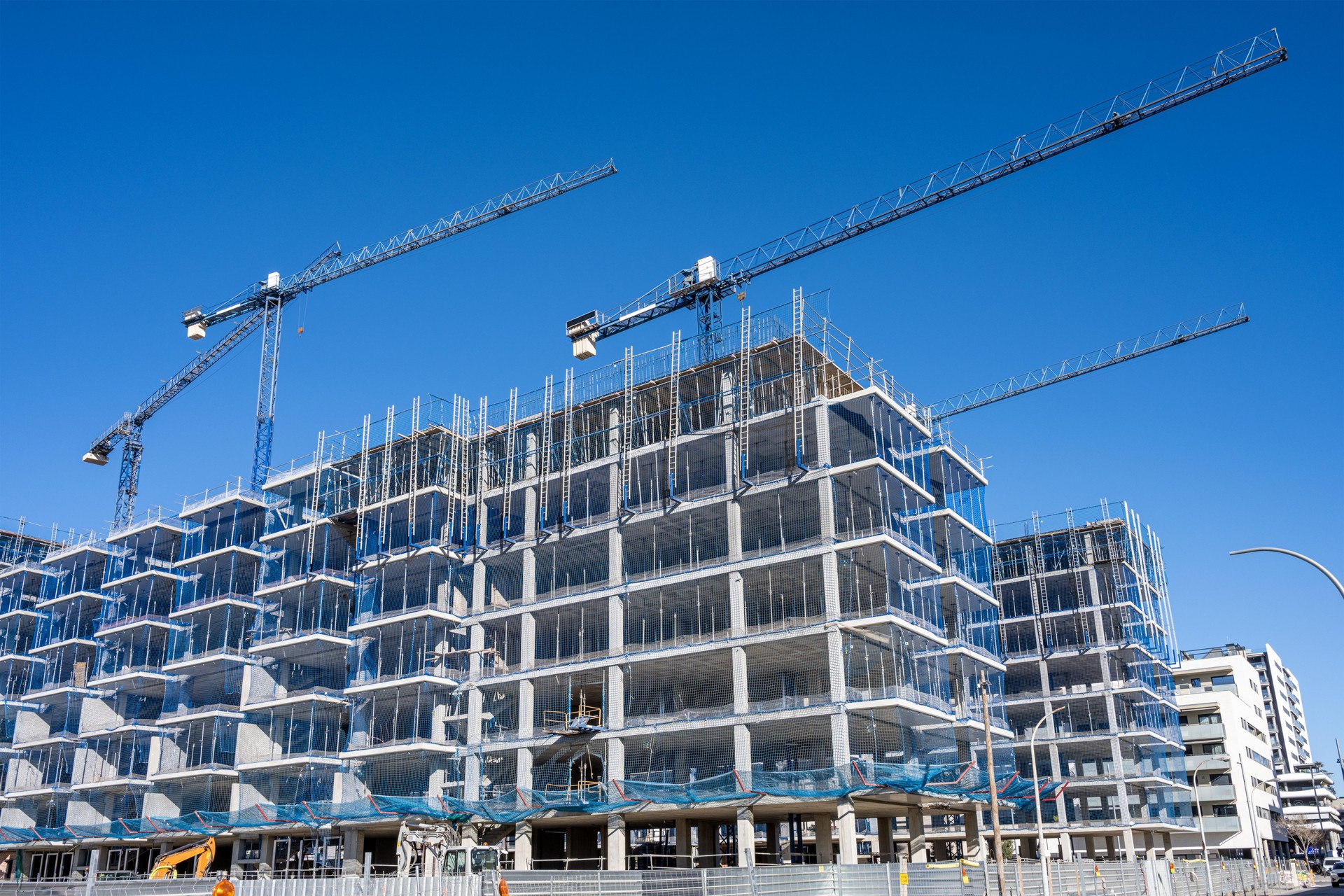
A carpenter has been sentenced to a one year Community Corrections Order after a young worker suffered fatal head injuries when he fell three metres through an unprotected stair void on a Glen Waverley construction site.
The sole trader, 29, trading as Big Basa Constructions, was sentenced without conviction in the Melbourne County Court today after pleading guilty to a single charge of failing to ensure a workplace under his management and control was safe and without risks to health.
He was ordered to complete 100 hours of community work and pay a $10,000 fine.
The court heard that the carpenter engaged a 23-year-old worker to assist him at the site, where he had been contracted to build frames and erect roof trusses for multi-storey townhouses.
In September 2022, the young worker was carrying lengths of steel along the first floor when he fell through the open stair void to the concrete floor three metres below.
He suffered serious head injuries and later died in hospital.
A WorkSafe investigation found there were no guardrails installed around stair voids in the units under construction and that the ladder used at the time of the incident did not extend past the first floor level.
It was reasonably practicable for the carpenter to eliminate or reduce the risk of death or serious injury due to a fall by installing perimeter guard rails around stair voids, and by using a ladder that extended at least 90 centimetres past the first floor and was securely fastened at the top and bottom.
WorkSafe’s Chief Health and Safety Officer Sam Jenkin said it was unacceptable that workers continued to die or suffer life-changing injuries as a result of falls from heights.
“It’s both shocking and heartbreaking to see a young worker lose his life after a workplace fall that could and should have been prevented,” Mr Jenkin said.
“No one ever thinks an incident like this will happen at their workplace and so, far too often, duty holders ignore well-known and relatively simple measures to control hazards – leading to tragedy.”
Pearl Construction Group Pty Ltd, the principal contractor on the site, has also been charged in relation to the incident and will appear at Melbourne Magistrates’ Court on 8 December 2025.
To prevent falls from height employers should implement the highest possible measures from the five levels in the hierarchy of controls:
Level 1 Eliminate the risk by, where practicable, doing all or some of the work on the ground or from a solid construction.
Level 2 Use a passive fall prevention device such as scaffolds, perimeter screens, guardrails, safety mesh or elevating work platforms.
Level 3 Use a positioning system, such as a travel-restraint system, to ensure employees work within a safe area.
Level 4 Use a fall arrest system, such as a harness, catch platform or safety nets, to limit the risk of injuries in the event of a fall.
Level 5 Use a fixed or portable ladder, or implement administrative controls.
$900k in fines handed out as SafeWork cracks down on falls from heights threats
Source: SafeWork NSW
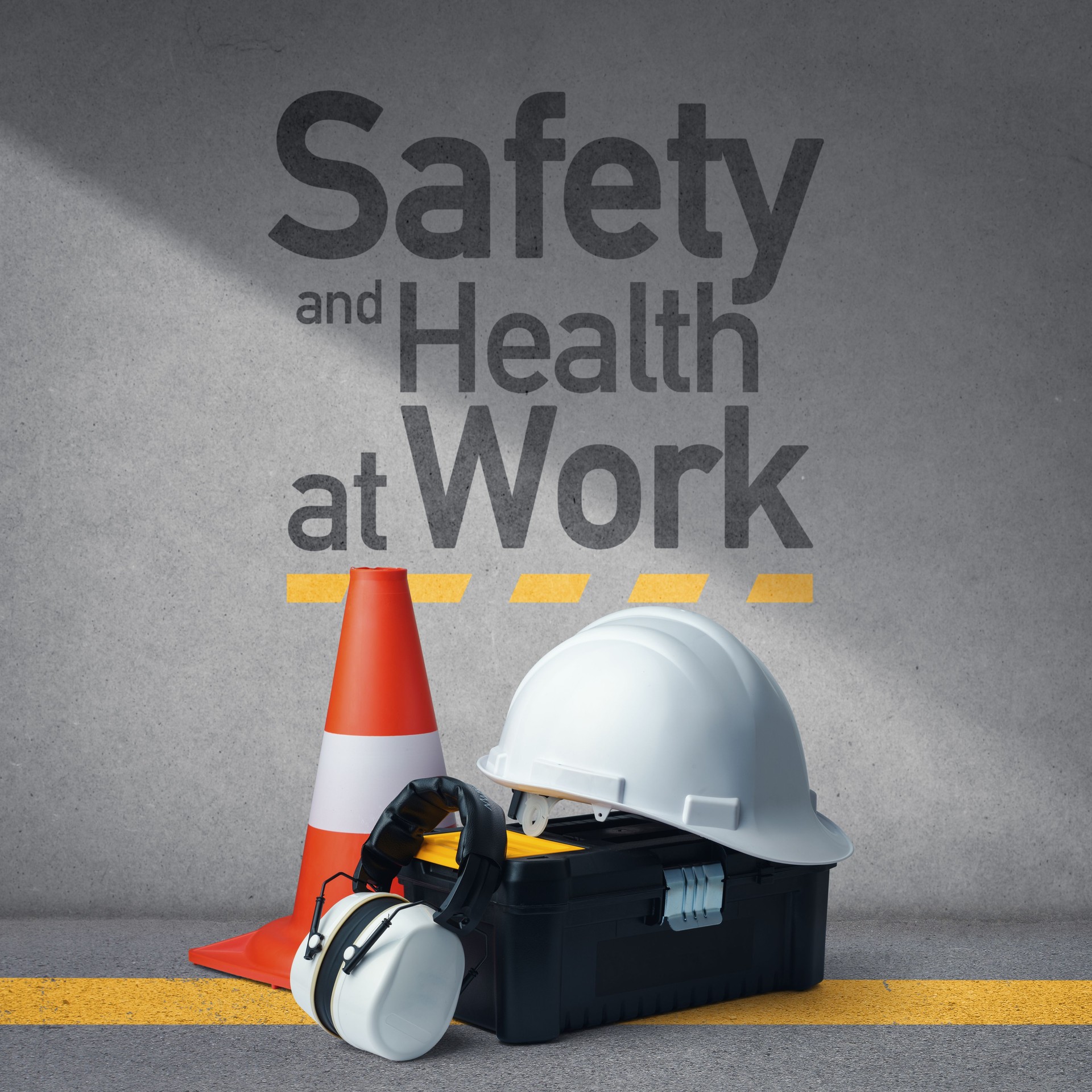
Almost $1 million in fines have been issued at the halfway point of SafeWork NSW’s 12-month blitz on falls from heights.
The ‘Working at Heights in Construction’ campaign followed a concerning rise in the number of serious injuries and deaths attributed to falls from heights, resulting in 17 people killed between 2018 and 2022.
Since May 2023, SafeWork Inspectors have visited 1,218 worksites resulting in 1,499 Improvement Notices, 727 Prohibition Notices and 352 Penalty Notices amounting to $972,000.
The blitz has seen Inspectors visit several commercial and residential sites across the state, as well as conducting high visibility checks in manufacturing and warehouse industries in addition to inspections in the transport industry leading up to a busy Christmas period.
During their field work, Inspectors gauged that 65 per cent of industry is using the highest form of safety measures as their first choice including the use of fall prevention devices, such as roof guardrails and scaffolding, rather than fall arrest systems such as harnesses.
SafeWork will continue to prioritise the safety of workers at heights in 2024 with continuing inspections, starting off with a blitz on the safe installation of rooftop solar panels this month.
Contractors and builders are obligated to protect workers by identifying height risks and taking steps to control these hazards as far as reasonably practical by implementing higher order controls.
Head of SafeWork NSW Trent Curtin said:
“As we pass the halfway point of SafeWork’s ‘Working at Heights in Construction’ compliance blitz it is important to note that falls from heights is still the number one cause of traumatic fatalities on NSW construction sites.
“While it is encouraging that 65 per cent of industry is using the highest form of safety measures, this means that 35 per cent are not and this needs to change. Otherwise, businesses run the risk of workplace accidents as well as fines and prosecution.
“During one worksite blitz a SafeWork Inspector noted a worker who was not connected to a harness system while working on a roof. When questioned as to why they were not connected, the worker reasoned that they had been roofing for 30 years without an incident.
“Attitudes like this will eventually result in a workplace accident or death. This is simply unacceptable. SafeWork Inspectors will not hesitate to stop work on site, issue fines and consider prosecution against businesses and individuals disregarding the rules.”

Know the Law
SafeWork NSW: Manage the risks of falls - or risk a fine
Safe Work Australia - Working at heights
Industrial Manslaughter:
This is a criminal offence under Section 34 of the Work Health and Safety Act 2011 (NSW).
Maximum Penalty for a Company: $20 million
Maximum Penalty for an Individual or PCBU: 25 years imprisonment
Industrial Negligence
Gross negligence or reckless conduct is a Category 1 offence under Section 31 of the Work Health and Safety Act 2011 (NSW).
Maximum Penalty for a Company: 90,424 penalty points (equivalent to $9,946,640 as of July 2024)
Maximum Penalty for an Individual: 9,038 penalty units (equivalent to $994,180 as of July 2024) or 10 years imprisonment
Maximum Penalty for a PCBU (Person Conducting a Business or Undertaking): 18,805 penalty units (equivalent to $2,068,550 as of July 2024) or 10 years imprisonment
CASE STUDIES:
Company director jailed for a year and fined $1m over workplace death
STANDARDS:
Managing the risk of falls at the workplace code of practice
AS/NZS 4488.2 – Industrial rope access systems – Selection, use and maintenance
AS/NZS 22846.1 Rope access systems Part 1: Fundamental principles for a system of work
AS/NZS 22846.2 Rope access systems Part 2: Code of practice

More on... Standards Update: AS5532 & AS/NZS1891.4 have just been updated.
The newly updated standards introduce significant updates for everyone working at heights, influencing how height safety products are designed, manufactured, and used.
October 03, 2025
Source: Kattsafe Australia
Here's what you need to know:
AS5532:2025 – Single Point Anchor manufacturing
AS5532 governs the performance and testing of single-point anchors used for fall arrest. The 2025 revision introduces stricter testing protocols and clearer installation requirements.
Key Changes:
1. Mandatory Substrate Testing
Anchors must now be tested on the actual substrate they’re intended to be installed on (e.g., metal roof sheeting, concrete). This ensures real-world performance rather than relying on lab-only results.
2. Energy-absorbing anchor testing
Any energy-absorbing anchors now have their own testing requirements, allowing tests to be completed on lighter gauge roofs, and the load being the result of the energy loaded into the structure, rather than a full static load requirement. With a rigid (non-energy-absorbing) anchor, this test measures the load equally on the anchor and the structure beneath it, but an energy-absorbing anchor reduces the load that is put on the structure it is mounted to.
3. Dynamic and Static Load Testing
Anchors must pass:
- Dynamic load tests (15kN) both inline and across the roof sheet. When the anchor is rated for two users, the anchor must now undergo two drop tests on the same anchor, as opposed to one.
-Static load tests (15kN) in both directions.
Kattsafe confirms that our anchors all comply with the updated Standards. Retrospective testing is not required as the previous testing criteria on our anchors required us to do the full static load test to 15kN in both directions, which was more rigorous than the current standards.
***********
AS1891.4:2025 – Selection, Use & Maintenance of Fall Arrest Systems
AS1891.4 focuses on how fall arrest systems are selected, used, and maintained. The 2025 update brings greater clarity and structure to ensure systems are not only compliant but also practical and safe in real-world use.
Key Changes:
1. Working on inclined surfaces
When a system is installed on a steeper roof, where the user will have to rely on the system to maintain a secure footing, the system must be set up in such a way that allows the user to have a secondary connection, OR have a passive system installed, such as a guardrail.
2. Clearer Definitions of System Types
The standard now better distinguishes between fall arrest systems, restraint systems and rope access systems, which helps users select the right system for the task.
3. Inspection and Recertification Requirements
Equipment that has multiple fasteners must be load tested at the time of installation, but ongoing pull testing is not required, whereas previously, this was required every 12 months.
This only applies if the fastener’s manufacturing criteria are met and documentation to support this is provided. This standard change is for systems with multiple fasteners only. Single fixings will still have to be tested every 12 months.
4. Pull test duration & rating
Pull testing only has to be done for 30 seconds, instead of 3 minutes as previously, with a minimum rating of 7.5kN, as opposed to 6kN as previously.
5. Training and Competency
The standard now emphasises the need for formal training and competency verification for anyone using or installing fall protection systems.
6. System Design and Documentation
Designers must provide detailed documentation in the project documentation package, including:
- System layouts
- Anchor specifications and load ratings
- Maintenance instructions
***********
What do these changes mean for you!
The 2025 updates to AS5532 and AS1891.4 represent a major step forward in height safety. By aligning testing with real-world conditions and improving clarity around system use and maintenance, these standards help protect lives and simplify compliance.
Actions for height safety installers:
- Ensure you are purchasing fall arrest devices that are adequately tested and manufactured in accordance with standard updates
- Make sure your install team are formally trained in the installation of fall arrest & protection systems, with verified proof of this training.
- Ensure your install team is aware of the new testing requirements at the time of install
Actions for project managers, designers or owners:
- Ensure you are hiring installers who are properly trained and well-versed in the updates to testing and maintenance
- Ensure the systems that are being installed on your building/project are manufactured and tested in accordance with standard updates.
- Make sure you are aware of the ongoing maintenance the systems will need to comply.
- Your height safety system design must be properly documented, with system layouts, anchor specifications, load ratings and a full maintenance plan.
If you're still unsure how these changes affect you or your future projects, reach out to our technical team for guidance and support.
Standards Update: AS/NZS 1891.4 and AS 5532
September 19, 2025
Source: Working at Heights Association of Australia
In 2023, almost 30 workers lost their lives due to falls from heights – making up to 15% of all workplace fatalities. Falls from height are now the second leading cause of workplace deaths, following vehicle-related incidents. The construction industry accounted for 45% of these fatalities.
These numbers highlight the ongoing risks faced by people working at heights and the urgent need for better safety systems, clearer guidance, and reliable equipment. Two key standards – AS 5532 and AS/NZS 1891.4 – have recently been updated to help address these issues and improve safety outcomes.
AS 5532: Manufacturing requirements for single-point anchor device used for harness-based work at height
This standard outlines how anchor points (used to secure safety harnesses) should be designed and tested. These anchors are essential for anyone working on roofs or elevated surfaces.
The revision addresses a key limitation in the previous version, which did not support installation on many types of timber and steel purlin roofs. The updated version now supports installation on a wider range of structures, making it easier for workers like solar installers, roof cleaners, and maintenance crews to use safe, approved anchor points in the right locations.
The revision also helps reduce risks such as swing falls and free falls and supports more sustainable practices.
AS/NZS 1891.4: Industrial fall-arrest systems and devices, Part 4: Selection, use and maintenance
This standard provides updated guidance on selecting, using, and maintaining fall-arrest equipment, like harnesses, lanyards, and lifelines.
The changes help designers, managers, and users make informed decisions based on the latest industry practices and testing standards. This reduces the risk of using incorrect or outdated equipment and improves safety for workers.
Importantly, the update does not add extra costs for users. While training materials may be revised to reflect the new guidance, no additional training beyond current requirements is expected.
These updates are designed to make height safety equipment easier to use, more reliable, and better suited to today’s building materials and work environments. By aligning safety standards with current industry needs, they help ensure workers are protected and that safety systems are practical and effective.
If you have a Small Business Set Subscription; the 1891.4 standard will automatically update.
If you have purchased the previous standards you will need to re-purchase the standards.
Stay tuned for further news about these changes in the coming days.
Keep Your Sites Safe & Compliant with SKC Solutions
Working at heights carries real risks—and strict responsibilities. At SKC Solutions, we help businesses like yours stay safe, meet all regulatory requirements, and maintain fully compliant height safety systems. From rooftop access to elevated platforms, we ensure your workplace is ready for any task.
How We Help Your Business:
- Comprehensive Height Safety Audits: Identify risks and ensure all anchors, guardrails, and fall protection systems meet current standards.
- Professional Installation & Maintenance: Our team installs, inspects, and services all height safety equipment, keeping your systems reliable and compliant.
- Regulatory Compliance Support: Stay ahead of changing safety regulations with expert guidance and documented compliance solutions.
- Safe Access for Your Team: From HVAC and air-conditioning maintenance to solar panel servicing, we make sure your staff and contractors can work safely at every level.
Why It Matters:
Non-compliance isn’t just risky—it can be costly. With SKC Solutions, you gain peace of mind knowing your business meets all Work Health and Safety (WHS) standards while protecting your team from preventable accidents.
Take Action Today:
Don’t wait for an incident or inspection to highlight gaps in your height safety systems. Let SKC Solutions assess your facility, upgrade your equipment, and provide ongoing support to keep your workplace safe, compliant, and fully operational.
✅ Book your height safety audit or consultation now and give your team the safe access they need—without the stress.